TL;DR
Over half of all Google searches now end without a single click. AI-powered tools like ChatGPT, Gemini, and Perplexity are absorbing those answers directly, and the businesses showing up inside those answers aren’t necessarily the ones with the best rankings. They’re the ones with the best-structured content.
For years, the playbook was simple. Target the right keywords, build backlinks, climb the rankings, get traffic. It worked – until it didn’t.
Today, users aren’t just searching. They’re asking. And AI answer engines don’t return a list of links, they generate a response. That response is built by pulling, combining, and interpreting content from across the web in real time.
What if you’re technically ranking but never actually getting seen?
This is the shift from traditional SEO to AI search optimization. In this guide, you’ll learn exactly what that shift means, why it changes how your content needs to be built, and what it takes to make sure your business is part of the answer – not invisible behind it.
What Does It Mean for AI to “Select” Your Content?

In traditional SEO, success had a clear finish line: reach position #1 on Google. The higher you ranked, the more traffic you got. It was a straightforward equation.
When someone asks ChatGPT, Gemini, or Perplexity a question, there is no list of ten blue links. There is one answer generated, synthesized, and delivered directly. That answer is assembled from multiple sources across the web, but only a handful of those sources actually make it in.
This means your content is no longer competing for a ranking position. It’s competing to be selected.
The difference matters more than it might seem. A page can rank on page one of Google and still never appear in a single AI-generated answer. At the same time, a well-structured page that doesn’t rank at all can be pulled directly into an AI response simply because it explains something clearly and concisely.
Visibility in AI search comes down to one question: is your content easy enough to understand, extract, and trust?
How AI Systems Actually Read Your Content

Most people assume AI search works the way traditional search does, crawl the page, assess the whole thing, assign it a score. That’s not what happens.
AI systems don’t read your page as a single unit. They break it down into fragments, individual paragraphs, sentences, and structured sections, and evaluate each one separately. A single well-written paragraph can outperform an entire 2,000-word article if it answers a question more clearly than anything else on the web.
This has one major implication: every paragraph on your page is its own opportunity to be found.
It also means the opposite is true. A long article filled with vague, generic, or repetitive content won’t be evaluated as a whole and forgiven for its weaker sections. Each fragment stands or falls on its own. If most of your paragraphs don’t directly answer something, most of your page gets ignored.
This is why structure is no longer just a design preference, it’s a discoverability signal.
Clear headings tell AI systems what each section is about before they read it. Focused paragraphs make individual fragments easier to extract. Short, direct sentences reduce ambiguity. These aren’t writing tips, they’re technical requirements for how AI systems process and select content.
Why Your Content Needs to Answer First, Explain Second

Think about how most websites are still structured. A long introduction. Some background context. A few paragraphs building up to the point. And finally, somewhere near the middle, the actual answer.
That structure made sense when readers had patience and search engines rewarded length. AI systems don’t work that way, and increasingly, neither do readers.
When an AI answer engine scans your content looking for a response to a user’s question, it prioritizes sections that get to the point immediately. If your answer is buried three paragraphs deep, the chances of that section being selected drop significantly. A competitor whose first sentence directly addresses the question will get chosen instead, even if the rest of your article is better.
The most effective content structure for AI search optimization looks like this:
Direct answer first – state what the answer is in one or two sentences, right at the top of the section.
Explanation second – follow with the context, reasoning, or background that supports the answer.
Detail third – add examples, data, or nuance for readers who want to go deeper.
This layered approach works for both humans and AI systems simultaneously. It respects a reader’s time while making each section clean enough to extract as a standalone response.
It is worth being clear about what this doesn’t mean. Writing for AI search optimization is not about making content shallow or stripping out depth. It means being precise. A detailed, well-researched section that leads with its conclusion will always outperform a vague section that buries it.
Why Clean Site Structure Is a Ranking Factor for AI Search
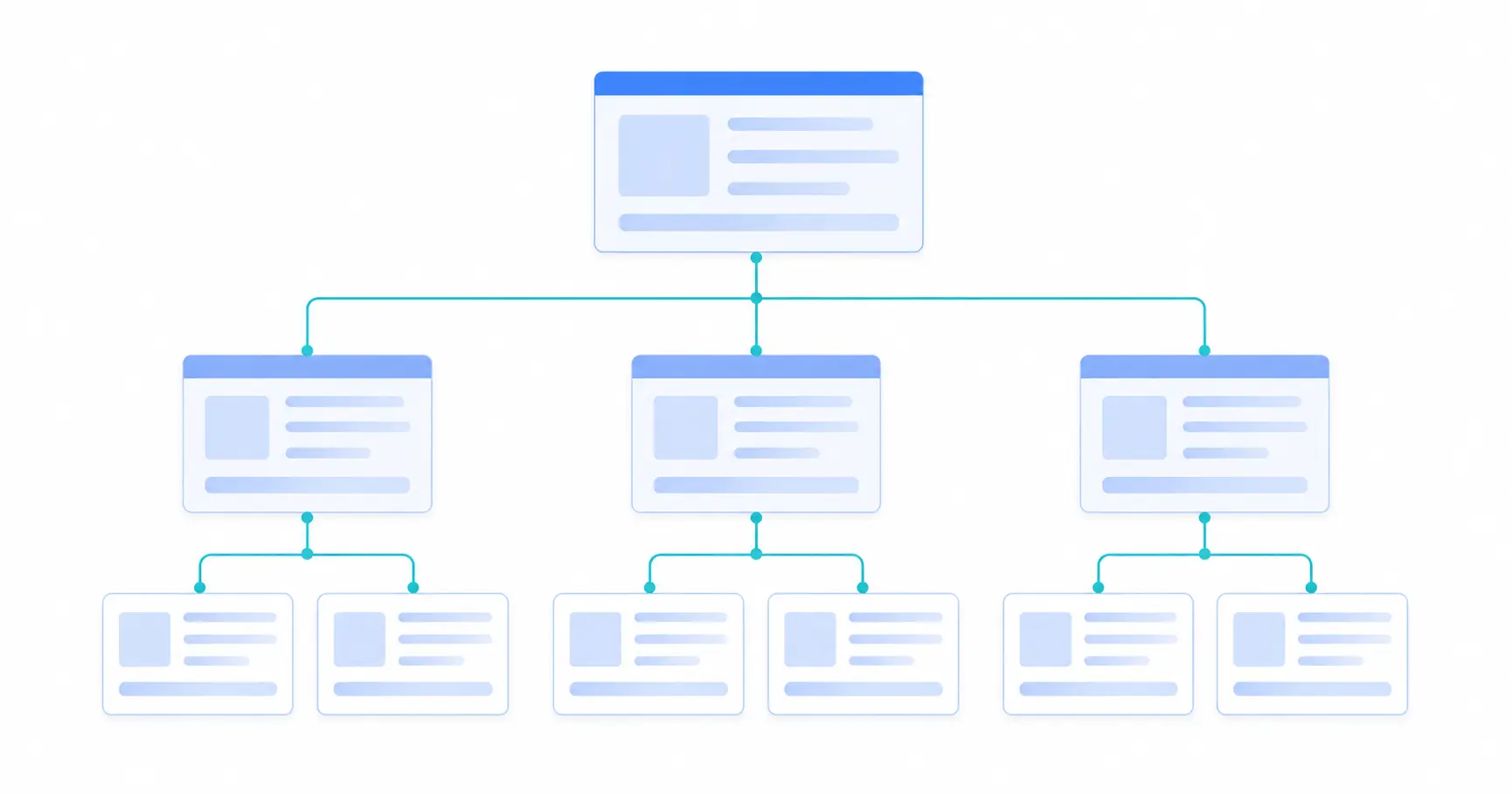
Traditional SEO had a relatively forgiving relationship with technical issues. A slow page or a messy heading hierarchy could still rank if the content was strong enough. In AI search optimization, that margin disappears almost entirely.
AI crawlers are built for efficiency. They process enormous amounts of content at speed, and they naturally favor websites that are easy to access, parse, and understand. A technically sound website doesn’t just perform better for human visitors – it becomes a more attractive and reliable source for AI systems to draw from.
Here’s what that means in practice.
Heading Hierarchy Tells AI What Your Page Is About
Your heading structure H1 down to H2, H3, and H4 – acts as a map for AI crawlers. It signals which topics are primary, which are secondary, and how the content is organized before a single paragraph is read.
A clear hierarchy looks like this: one H1 for the page title, H2s for each major section, H3s for sub-points within those sections. When that structure is logical and consistent, AI systems can index each section independently and match it to relevant queries with much greater accuracy.
When headings are skipped, misused, or styled manually instead of tagged correctly in the HTML, that map breaks down. AI systems encounter ambiguity and move on.
Page Speed Directly Affects AI Crawl Efficiency
Page speed has always been an SEO factor. In AI search, its importance is amplified because AI crawlers operate under tighter efficiency constraints than traditional bots.
A slow-loading website creates friction at the crawl level – meaning AI systems may not fully process your content before moving to a faster, equally relevant source. Google’s own data consistently shows that pages loading in under two seconds retain significantly more crawler attention than slower alternatives.
This is one of the core reasons an SEO-ready WordPress build matters beyond aesthetics. Speed is baked into how the site is built – not added as an afterthought.
Proper Indexing and Accessibility Keep You in Consideration
If AI systems cannot access your content, none of the above matters. Pages blocked by robots.txt errors, missing sitemaps, broken canonical tags, or poor mobile responsiveness are effectively invisible to both traditional and AI search.
Routine WordPress maintenance ensures these technical foundations stay intact over time – not just at launch. A website that was technically clean six months ago can develop indexing issues through plugin conflicts, theme updates, or configuration changes without anyone noticing until traffic drops.
How Schema Markup Helps AI Systems Understand Your Content Faster
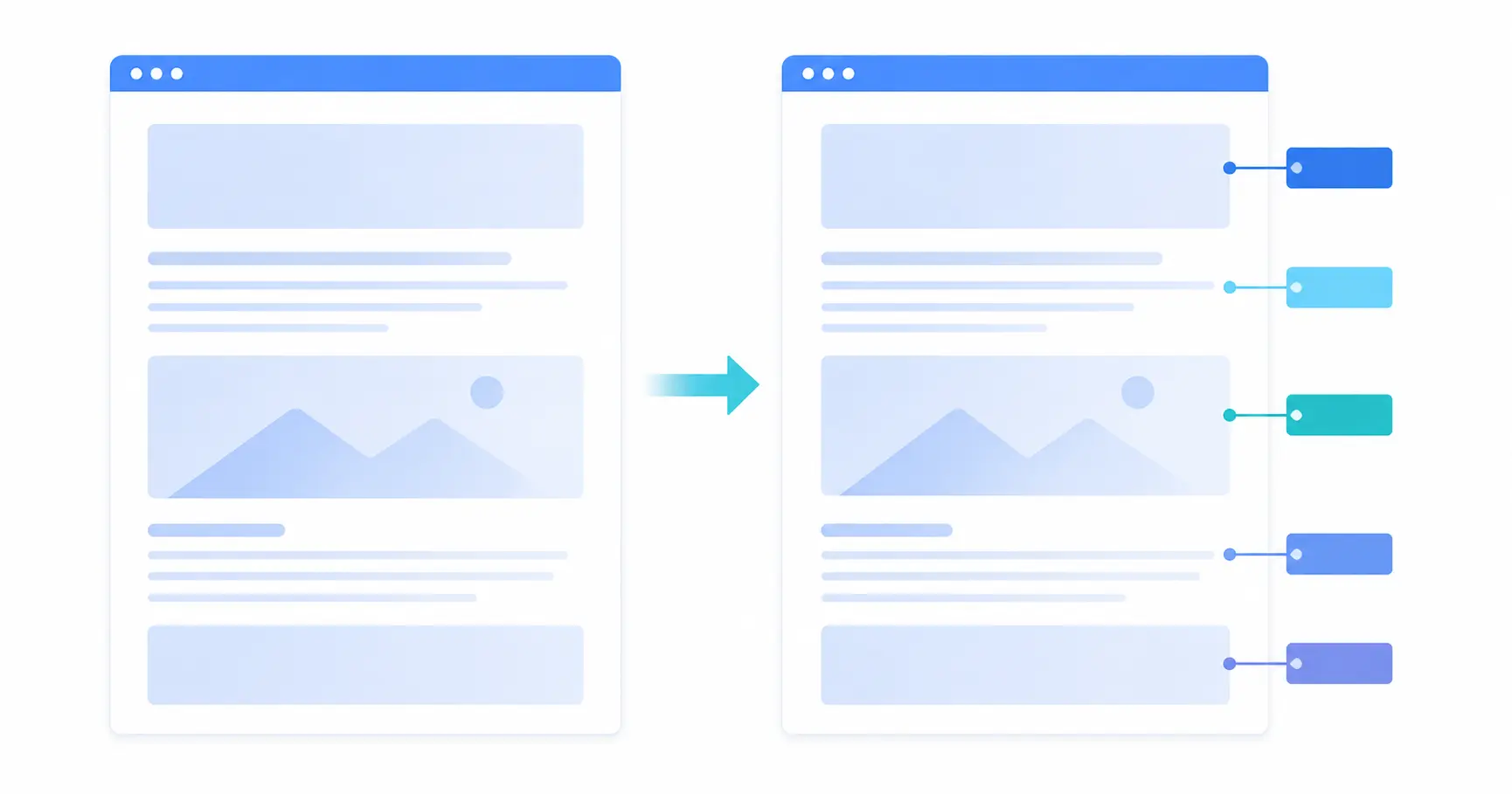
When an AI system scans your page, it reads the text – but it also reads the signals underneath the text. Schema markup is one of the most powerful of those signals, and one of the most underused by businesses that don’t have a technically optimized website.
Schema markup is a form of structured data added to your site’s code. It doesn’t change what your page looks like to a visitor. What it does is label your content so that AI systems and search engines understand exactly what type of information they’re looking at – without having to interpret it from context alone.
What Schema Markup Actually Does for AI Search
Without schema, an AI system has to infer what your content represents. Is this paragraph an answer to a question? Is this a list of steps? Is this a review, an article, or a product description? That inference takes processing and introduces uncertainty.
With schema, that ambiguity disappears. You’re telling the system directly: this is a FAQ. This is a how-to guide. This is an article published on this date by this author. AI systems respond to that clarity by processing your content with greater confidence — which increases the likelihood of it being selected for a generated answer.
This is not a theoretical advantage. Google’s own structured data documentation confirms that properly implemented schema directly improves how content is understood and surfaced across search experiences.
The Schema Types That Matter Most for AI Visibility
Not all schema is equally valuable for AI search optimization. These are the types with the most direct impact:
FAQ schema labels a block of questions and answers as exactly that. AI answer engines actively look for Q&A formatted content because it mirrors how users ask questions. A page with properly implemented FAQ schema gives AI systems pre-packaged answers they can extract with high confidence.
Article schema provides context about the page itself – the title, author, publication date, and last updated date. For E-E-A-T purposes, this is critical. It tells AI systems that the content is attributed, dated, and maintained – all signals of trustworthiness.
HowTo schema labels step-by-step content so AI systems can extract individual steps as structured responses. For any content that walks a reader through a process, this schema type significantly increases extractability.
Aggregate Rating schema – covered in more detail in this guide on boosting SEO with Aggregate Rating Schema – signals social proof and credibility, both of which AI systems factor into source selection.
Schema Needs to Be Implemented Correctly to Work
This is where many websites fall short. Schema markup that is present but incorrectly coded can be worse than no schema at all – it introduces conflicting signals that confuse both AI systems and Google’s crawlers.
Implementation needs to happen at the code level, validated against Schema.org standards and tested through Google Search Console’s rich results tool. It is not something that can be reliably handled through a plugin toggle alone – it requires a properly structured build from the ground up.
How Topical Depth Builds Trust With AI Search Engines

Publishing one strong article on a topic is a good start. But for AI search engines, a single piece of content, no matter how well written or structured – is rarely enough to establish your website as a trusted source on that subject.
AI systems don’t just evaluate individual pages. They evaluate patterns. They look at how consistently a website covers a topic, how much depth exists across that coverage, and how different pieces of content connect to each other. A website that has ten well-structured, interlinked pages on a subject sends a fundamentally stronger signal than a website with one excellent page surrounded by unrelated content.
What Topical Authority Means in Practice
Topical authority is not about publishing more content. It is about building a coherent system of coverage that demonstrates genuine expertise across a subject area.
The most effective structure for this is a topic cluster model:
A pillar page covers the core topic comprehensively it is the definitive resource on the subject. This post is an example of a pillar page for AI search optimization.
Supporting pages explore specific angles, questions, or sub-topics that the pillar page introduces but doesn’t go deep on. Each supporting page targets a more specific query while reinforcing the pillar’s authority.
Internal links connect everything together from supporting pages back to the pillar, and from the pillar out to supporting pages. This interconnection tells AI crawlers that your website has a coherent, navigable knowledge base on the subject rather than isolated pieces of content.
Why Internal Linking Is a Trust Signal for AI Systems
Internal links do more than help human readers navigate. They communicate relationships between pages to AI crawlers signaling which pages are authoritative, which are supplementary, and how topics connect.
A well-linked cluster of content on a subject is significantly harder for AI systems to ignore than a single standalone page. It creates multiple entry points for discovery, reinforces topical relevance across the domain, and demonstrates the kind of consistent coverage that AI systems associate with expertise.
How to Start Building Topical Depth
Building topical authority doesn’t require publishing dozens of articles at once. It requires a deliberate plan and consistent execution over time.
Start by identifying the core questions your target audience is asking around your primary topic. Each significant question is a potential supporting page. Map those pages to your pillar, plan the internal links in advance, and build outward from there.
Why Your Brand Reputation Beyond Your Website Matters
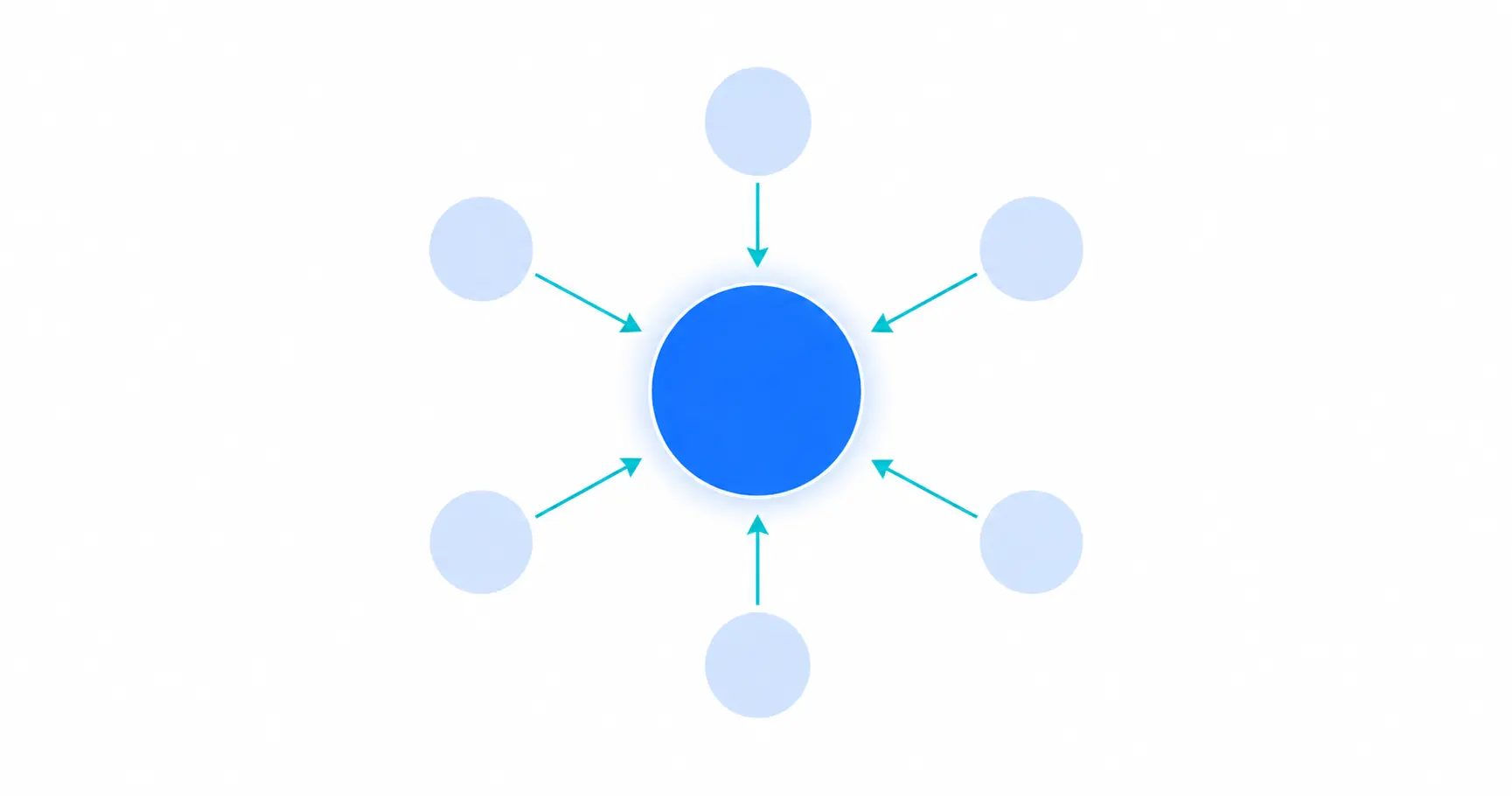
Most businesses treat SEO as something that happens on their own website. Optimize the pages, fix the technical issues, build the internal links, and that’s the job done. That thinking made sense in traditional search. In AI search optimization, it only covers half the picture.
AI systems don’t learn about your brand exclusively from your website. They learn from the entire web forums, review platforms, industry publications, social media discussions, third-party directories, and mentions across unrelated sites. All of that external data shapes how AI systems perceive your brand’s relevance, credibility, and authority on a given subject.
How AI Systems Build a Picture of Your Brand
When an AI answer engine encounters your brand name repeatedly across multiple independent sources in relevant contexts, associated with the right topics, and discussed in a positive or neutral way it builds a stronger associative signal between your brand and that subject area.
The inverse is equally true. A brand that publishes excellent content on its own website but has almost no presence in external conversations, reviews, or industry discussions sends a weaker signal than a brand with a consistent footprint across the web even if that competitor’s on-site content is less polished.
What a Strong Off-Site Presence Looks Like
Building an off-site presence that AI systems recognize doesn’t require a large marketing budget or a PR agency. It requires consistency and relevance.
Being cited or mentioned in industry publications related to your field signals topical authority to AI systems. Appearing in relevant forum discussions – Reddit, Quora, niche communities puts your brand into the conversational data that AI systems are trained on and actively crawl. Maintaining accurate and complete profiles on third-party platforms like Google Business Profile, Trustpilot, and industry directories reinforces your brand’s existence and credibility as an independent signal.
Why Your Website’s Design Plays a Role Here Too
There is a direct connection between how your website looks and performs and how confidently external sources reference it. A professionally designed, fast, and well-structured website the kind built with UX/UI design principles at its core – is significantly more likely to be cited, linked to, and mentioned by third parties than one that appears outdated or untrustworthy on first impression.
What Metrics Actually Matter in AI Search Optimization

For years, the metrics that defined SEO success were straightforward. Rankings, organic traffic, click-through rates, and bounce rates told you most of what you needed to know. If those numbers were moving in the right direction, your strategy was working.
AI search optimization requires a broader measurement framework. Not because the traditional metrics stop mattering they don’t – but because they no longer tell the complete story. A website can maintain strong rankings and healthy organic traffic while becoming increasingly invisible inside AI-generated answers. And that invisibility is where the next wave of traffic loss will come from.
Are You Being Cited in AI-Generated Answers?
The most direct measure of AI search visibility is whether your content is appearing in generated responses from tools like ChatGPT, Perplexity, and Google’s AI Overviews.
This requires manual monitoring for now search your primary keywords and questions in each major AI tool and observe whether your brand or content appears in the responses. Note which pages get cited, which topics trigger citations, and which competitors appear instead of you.
How Many Queries Does Your Content Actually Support?
Traditional SEO often focuses on ranking for one primary keyword per page. AI search optimization rewards content that can answer a wide range of related queries from a single well-structured page.
This is sometimes called query coverage the number of distinct questions or search intents a single page can credibly address. A pillar page on AI search optimization, for example, should be able to support queries about GEO, AI answer engines, structured content, schema markup, topical authority, and more, all from within the same piece.
Measuring query coverage means going beyond your primary keyword rankings and analyzing which long-tail and question-based queries each page is appearing for in Google Search Console. Pages with broad query coverage are inherently more valuable in an AI search environment because they provide more entry points for AI systems to draw from.
Is Your Brand Being Mentioned – With or Without a Link?
As discussed in the previous section, unlinked brand mentions are becoming a meaningful AI visibility signal. Tracking those mentions requires a different approach than traditional backlink monitoring.
Tools like Google Alerts, Mention, or Ahrefs’ content explorer allow you to monitor where your brand name appears across the web in articles, forums, reviews, and discussions regardless of whether a link is included. The volume, context, and sentiment of those mentions paints a picture of how AI systems are likely perceiving your brand’s authority on a given subject.
The Metric That Ties It All Together
Across all of these individual signals, the unifying question is: how often does your content contribute to answering real questions?
Why Generic Content Gets Ignored by AI Answer Engines
There is a quiet crisis happening across the web right now. Businesses are publishing more content than ever more blog posts, more landing pages, more guides, and getting less return from it than at any point in the last decade. The volume is going up. The visibility is going down.
The reason is straightforward: AI can generate generic content instantly and at scale. That means anything vague, surface-level, or indistinguishable from a hundred similar pages has no competitive advantage whatsoever. AI answer engines have effectively infinite access to generic information. They have no reason to select yours.
What Makes Content Impossible to Ignore
The content that gets selected by AI answer engines consistently shares a set of characteristics that generic content cannot fake.
Real experience is the most powerful differentiator. Content that draws on direct, first-hand knowledge of a subject specific situations, observed outcomes, lessons learned from actual work reads differently than content assembled from other sources. AI systems are increasingly trained to recognize the difference, and so are human readers.
Clear thinking matters more than comprehensive coverage. A section that takes a clear position, explains its reasoning precisely, and anticipates the obvious objection will outperform a section that covers the same topic from every angle without committing to anything. Clarity signals confidence. Confidence signals authority.
Unique insights are content that could only come from your specific perspective, experience, or data. Industry observations, original analysis, proprietary data, case study findings these are the elements that make a page genuinely irreplaceable. If your content could have been written by anyone, it will be treated as interchangeable with everything else.
Practical value means the reader can do something with the information immediately. Abstract explanations of concepts have their place, but content that bridges the gap between understanding and action specific steps, real examples, decision frameworks is significantly more likely to be extracted and cited by AI systems because it directly serves the user’s intent.
The Replaceable Content Trap
Most businesses fall into the replaceable content trap not because they lack expertise, but because they publish at the wrong level of specificity. They write about topics instead of writing about what they actually know about those topics.
The distinction is subtle but critical. An article titled “Why Website Speed Matters” covers a topic. An article that explains precisely how a bloated plugin stack quietly degraded a client’s Core Web Vitals score, and what fixing it did to their organic traffic demonstrates knowledge. One of those can be generated by any AI tool in thirty seconds. The other cannot.
This is where the foundation of your website becomes relevant again. A technically clean, well-structured, fast-loading site built with SEO-ready WordPress development ensures that when genuinely valuable content exists on your pages, nothing on the technical side prevents it from being found, crawled, and selected. The best content in the world sitting on a slow, poorly structured website is still content that AI systems will struggle to access and prioritize.
GEO vs SEO — What’s the Difference?
If you’ve been following the conversation around AI search, you’ve likely started seeing a new term appearing alongside traditional SEO: GEO – Generative Engine Optimization. The two are related but distinct, and understanding the difference is essential for any business trying to build a sustainable visibility strategy in 2025 and beyond.
SEO — Search Engine Optimization is the practice of optimizing your website and content to rank in traditional search engine results pages. It has been the dominant framework for online visibility for over two decades, and it remains important. Google still processes billions of searches every day, and organic rankings still drive significant traffic for businesses across every industry.
GEO — Generative Engine Optimization is the emerging practice of optimizing your website and content to be selected, cited, and used by AI answer engines. Where SEO asks “how do I rank higher?”, GEO asks “how do I get chosen as a source?” The goal shifts from earning a position on a results page to earning a place inside a generated answer.
SEO vs GEO — Side by Side
| Traditional SEO | Generative Engine Optimization (GEO) | |
| Primary goal | Rank on search results pages | Be cited in AI-generated answers |
| Success metric | Rankings, organic traffic, CTR | AI citations, query coverage, brand mentions |
| Content format | Keyword-optimized pages | Fragment-optimized, Q&A structured content |
| Technical focus | Page speed, backlinks, crawlability | Structured data, schema markup, clean architecture |
| Authority signals | Backlinks, domain authority | Brand mentions, topical depth, E-E-A-T signals |
| Visibility type | Position on a list | Inclusion in a synthesized answer |
| User behavior | Click through to your website | Read answer directly — may or may not click |
| Optimization unit | The full page | Individual paragraphs and sections |
| Update frequency | Periodic keyword and content updates | Continuous freshness, date signals, author attribution |
| Tools used | Semrush, Ahrefs, Google Search Console | Emerging: BrightEdge, Authoritas + traditional tools |

Do You Need Both?
Yes, and the good news is that the foundations overlap significantly.
A website that is technically clean, fast, well-structured, and built on a logical heading hierarchy performs well in both environments. The difference is in the additional layer GEO requires: schema markup, fragment-level content optimization, Q&A formatting, author attribution, and topical depth.
Think of SEO as the foundation and GEO as the next floor built on top of it. You cannot build the second floor without the first but having only the first floor means you’re invisible to a growing share of how people are finding information online.
The businesses that will have the strongest visibility over the next five years are those that treat SEO and GEO not as competing priorities but as a unified strategy one that starts with a technically sound, well-designed website and builds outward from there.
For a deeper look at how AI is reshaping the web design landscape specifically, this overview of AI in web design covers the broader context behind these shifts.
Conclusion: Are You Part of the Answer?
Search is not disappearing. It is evolving faster than most businesses are prepared for.
The shift from traditional search results to AI-generated answers is already well underway. ChatGPT, Gemini, and Perplexity are not experimental tools anymore — they are where a growing share of your potential customers are going to find information, evaluate options, and make decisions. The businesses that show up inside those answers will have a significant and compounding advantage over those that don’t.
The good news is that the path to AI search visibility is not mysterious. It follows a clear set of principles that this guide has walked through from start to finish.
AI systems select content, they don’t just rank it. Visibility is no longer about where you appear on a list it’s about whether your content is chosen as a trusted source inside a generated answer.
Structure is everything. Clear heading hierarchies, fragment-optimized paragraphs, and direct answers at the top of every section are the technical signals AI systems use to evaluate and extract your content.
Schema markup removes ambiguity. FAQ, Article, and HowTo schema tell AI systems exactly what your content represents, increasing the confidence with which they cite it.
Topical depth builds trust over time. A single strong page is a starting point. A coherent, well-interlinked cluster of content on a subject is what establishes your website as an authoritative source that AI systems return to repeatedly.
Your reputation extends beyond your website. Brand mentions, third-party reviews, and off-site presence all feed into how AI systems perceive your credibility independently of what your own pages say about you.
GEO and SEO are not competing strategies. They share the same technical foundations. A well-built, fast, properly structured website is the starting point for both, and the businesses investing in those foundations now are building an advantage that will be very difficult to close later.
The question is no longer where you rank.
The question is: are you part of the answer?
If you’re ready to find out where your website currently stands, and what it would take to make it visible in the AI search era, schedule a free consultation and we’ll take it from there.
FAQ
What is AI search optimization?
What is the difference between SEO and GEO?
How do AI answer engines decide which content to use?
AI answer engines evaluate content based on several factors: how clearly and directly it answers a question, how well-structured the page is technically, whether schema markup is present, how authoritative the source appears based on E-E-A-T signals, and how consistently the website covers the relevant topic.
Content that is fragment-optimized, meaning individual paragraphs and sections are clear and self-contained — has a significantly higher chance of being selected than content that buries its answers in long, unstructured blocks of text.
What is E-E-A-T and why does it matter for AI search?
How does website structure affect AI search visibility?
Website structure is one of the most direct technical factors in AI search visibility. A logical heading hierarchy, clean HTML, fast loading speeds, proper indexing, and correctly implemented schema markup all make it easier for AI crawlers to access, parse, and understand your content.
A poorly structured or slow website creates friction at the crawl level, meaning AI systems may never fully process your content before moving to a faster, better-structured alternative. This is why an SEO-ready website build is the starting point for any serious AI search optimization strategy.
How long does it take to see results from AI search optimization?
AI search optimization is a medium to long-term strategy. Some improvements — particularly technical fixes like schema markup implementation, heading structure corrections, and page speed improvements – can produce visible results within weeks in terms of how AI systems parse your content.
Broader signals like topical authority and brand mention growth typically take three to six months of consistent effort before showing meaningful impact on AI citation rates. The businesses that start building these foundations now will have a significant advantage as AI search continues to grow.
Where do I start with AI search optimization?
The most effective starting point is a technical audit of your website’s current foundations — page speed, heading structure, indexing, schema markup, and mobile responsiveness. These are the elements that determine whether AI systems can access and understand your content at all.
From there, the focus shifts to content structure, topical depth, and off-site brand presence. If you’re unsure where your website currently stands, scheduling a free consultation is the fastest way to get a clear picture of what needs to be addressed and in what order.